Total Pageviews

Saturday, June 2, 2018

American Oystercatcher on the Delaware River June 2, 2018

American Oystercatcher on Shoal at low tide
          Even though migration has wound down, I thought I would take a chance and sit at the river behind the Philadlephia Airport in case something strange would happen to show. I arrived around 9:30AM but low tide was going to be at 11:04AM, so I figured I would have a nice relaxing time waiting for the shoal to appear and attract some birds.
          Eventually things started to land on the exposed mudflat. Two Caspian Terns landed and started preening. Ospreys were present in good numbers and one was actually taking a bath at the end of the spit. Finally, I was ready to go home and one more look revealed a couple new terns had arrived. Another Caspian and a smaller tern sitting next to it. The smaller tern had a distinctive white forehead and right away I thought "Least Tern", but  then I realized it was too large for a Least Tern and identified it as a Forster's. After viewing the tern, I worked the scope to the right about a glass or so and spotted, to my amazement, an American Oystercatcher. I was shocked, since this is a rare bird in Pennsylvania, let alone Delaware County, and it was also the second one I 've seen this year at the same mudflat. Unreal! 
          As you can see I managed a few poor photos, since the bird was about 1/2 mile away. But nevertheless they are undentifiable.

Oystercatcher with 3 Caspian Terns


Thursday, May 31, 2018

Texas Photos from April Trip

          
Barred Owl in Waco Wetlands

          Sharon and I made a week long trip to Texas in late April. We flew to Waco to do some sightseeing and then took a flight to Harlingen to bird along the Rio Grande Valley. The following are mostly bird photos for your enjoyment.

Neotropic Cormorant

Green Tree Frog

Texas Blue Bonnets

Dr Pepper Museum in Waco

The Silos from the HGTV show Fixer Upper.

Western Kingbird

Waco Mammoth National Monument 

Mommoth Tusk Fossil

TexasWaffle Breakfast

Sora - Convention Center on South Padre Island


Caracara at Brownsville Landfill

Imm White-tailed Hawk at Landfill (leftmost)
Adult White-tailed Hawk - Old Port Isabel Rd

Gull-billed Terns - Old Port Isabel Rd

Scissor-tailed Flycatcher - Old Port Isabel Rd

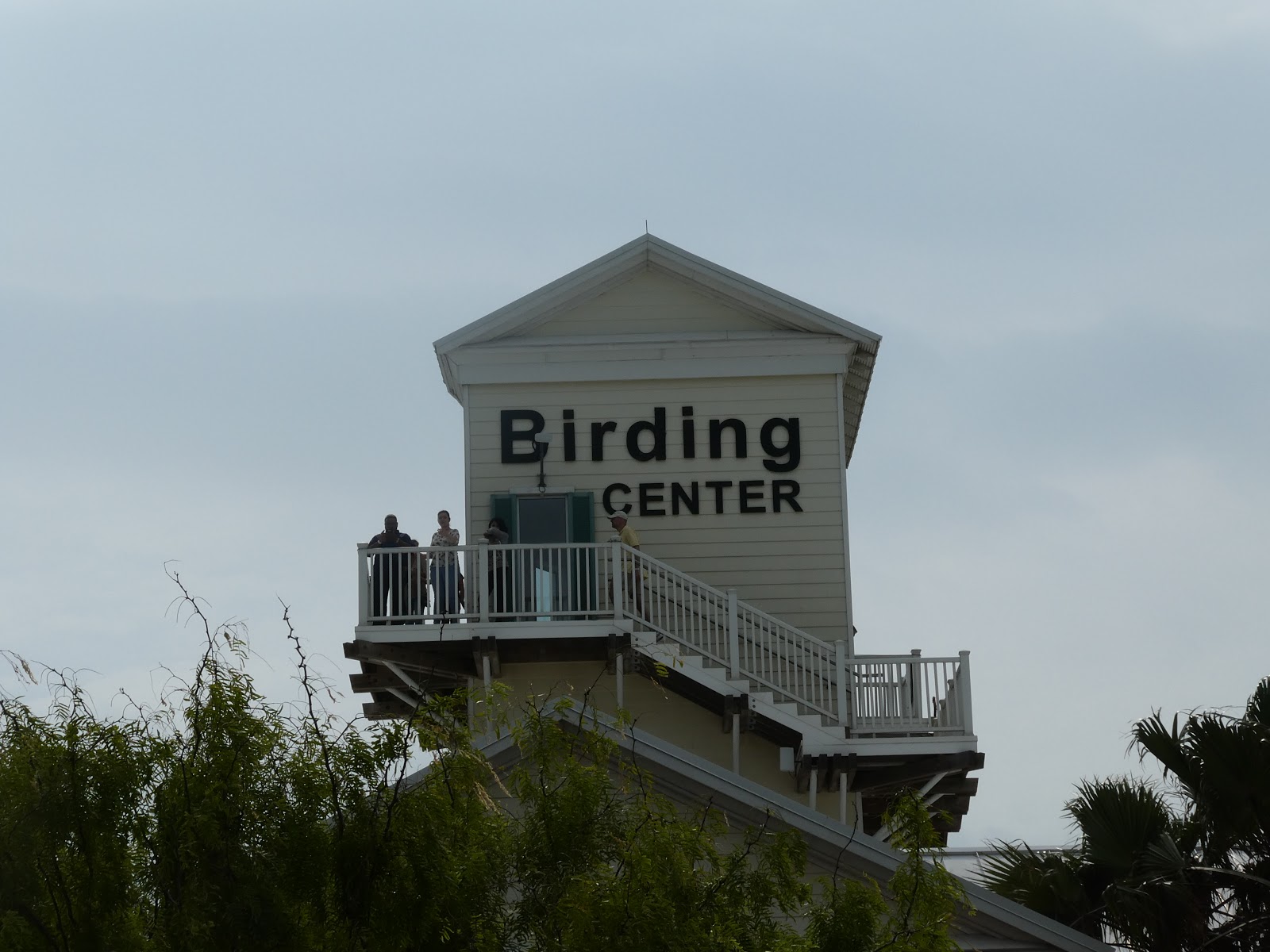
S Padre Island Birding Center

Black-necked Stilt - S Padre Island Convention Center

Reddish Egret - S Padre Island Convention Center

American Coot

Tricolored Heron - S Padre Island Convention Center


Birding Center Boardwalk

Tricolored Heron - S Padre Island Convention Center

Common Gallinule - Birding Center

Mottled Duck - Notice black area at gape of mouth

Common Gallinule

Great Egret

Roseate Spoonbill, Laughing Gull and Common Gallinule

Black-bellied Whistling-Ducks

Scarlet Tanager - Birding Center


Tightrope Act - Black-bellied Whistling-Ducks

Tennessee Warbler - Convention Center

Hooded Warbler - Convention Center

Dickcissel

Some of the Indigo Buntings at the Convention Center
        These were some of the birds seen on just the first three days in Texas. More to come.

Thursday, March 29, 2018

Recovering America's Wildlife Act

          I have written and sent an email to my U.S. Representative in congress to request that he co-sponsors the Recovering America's Wildlife Act H.R. 4647. I have attached a copy of the wording that was sent in the email hoping that you will copy the letter and email it to your representative. If you don't know your representative's email address you can find it here:
 www.house.gov/representatives/find-your-representative

          Letter is below and thanks for your interest:


Please co-sponsor the Recovering America's Wildlife Act H.R. 4647, which provides dedicated funding for proactive conservation measures that will secure the long-term future of all fish and wildlife.

The conservation funding would not come from new taxes, but rather from a portion of existing annual leasing and royalty revenues from federal lands and waters. It would complement effective existing programs and provide the states, territories and the District of Columbia with desperately needed financial resources to effectively implement their Wildlife Action Plans and conserve the thousands of species at greatest risk through collaborative, proactive efforts, rather than more expensive and often litigated emergency room measures.

I urge you to create a bright future for America's wildlife and rich natural heritage by putting your full support behind the bipartisan Recovering America's Wildlife Act H.R. 4647.

Tuesday, March 20, 2018

Longwood Gardens Prescribed Burn

Setting The Prescribed Burn
           Yesterday, March 19, 2018, Sharon and I witnessed the prescribed burn of the meadow at Longwood Gardens in Kennett Square. 


         Some talking points about the burn are provided by Tom Brightman of Longwood.


2018 Prescribed Meadow Burn Talking Points:

         What is a Prescribed or Controlled Burn? A Prescribed or Controlled Burn is fire applied in a knowledgeable manner to live and dead vegetation on a specific land area under selected weather conditions to accomplish predetermined objectives.

·        Why are we burning the Meadow Garden? To ensure the continued health and vibrancy of the Meadow Garden, we use the practice of conducting ecologically beneficial prescribed burning. A prescribed burn controls woody and non-woody invasive plants and enhances native herbaceous plant communities. In turn, it also encourages diverse wildlife populations. Almost as important, controlled burns help reduce the fuel load (live and dead vegetation) of the meadow, reducing wildfire risk and making it a safer place for our community.

·        Are we burning the entire Meadow Garden? No. We will only be burning four areas of the Meadow Garden, or about 30% of its 86 acres. Conditions permitting, we plan on burning units 1, 4, 8 and 10 (as indicated with black circles on the map below).  We rotate the units from year to year as ecological conditions warrant, and to maintain a large amount of wildlife habitat throughout the year.

·        Who conducts the Prescribed Burn? With safety at the forefront, these burns will be conducted by contractors and Longwood staff specifically trained in the safe and effective practice of prescribed fire management. In addition, local and state authorities and emergency resources are aware and on standby if needed for assistance.

The PA Prescribed Fire Standards have established detailed requirements to the planning and procedures for a controlled burn.  The Standards are in place to ensure every burning operation has the correct equipment, enough trained personnel, and proper smoke management plan.


·        Will the Meadow Garden be closed?  Yes. All access to the Meadow Garden and Webb Farmhouse will be closed to guests and staff. In addition, the Lookout Loft Treehouse and selected paths adjacent to the Meadow Garden will be inaccessible for March 19 and possibly March 20.

·        How do you protect the structures?
Large firebreaks are mowed around tree lines, trees and structures to protect them during a burn.  We also have plenty of water resources on –hand during the controlled burn.

·        What happens to the wildlife during the burn?
Animals and other wildlife have natural instincts concerning fire.
They burrow under the ground, or move to a part of the meadow which will not be burned. This time of year is selected as birds are not yet nesting in the meadow grasses.


View of Meadow after the burn. It should be green again in 3 weeks

Sunday, February 18, 2018

Gray-crowned Rosy-Finch in Pennsylvania


          Sharon and I decided on Friday that we would chase the Gray-crowned Rosy-Finch in Meadville, PA. Meadville is located in western Pa a little south of Erie. It was approximately a 6 hour drive and since we didn't leave until 2PM we arrived at our hotel in the dark. We had contacted a local birder named Shawn Collins to lead us to the private location. He had made arrangements with the homeowner where the bird was visiting a feeder in a gated community. 
           Saturday morning we met up with Shawn at 7AM and made the five minute drive to the location. The gracious homeowners allowed 14 of us to crowd into their small living room with a large picture window.
Wishful Birders
           We arrived around 7:10 and by the time everyone was settled into the room it was 7:20. Well, we didn't have to wait long because at 7:34 the finch made his appearance.
 
Target Acquired


Another more distant view of Gray-crowned Rosy-Finch
          The Rosy-Finch seemed to like hanging out with a large flock of 30 or more American Goldfinch.
 
Small portion of American Goldfinch flock

           Also visiting the feeders were Black-capped Chickadees and an American Tree Sparrow.
 
American Tree Sparrow

           After great views of our target bird we decided to head even further west and go to Pymatuning State Park on the PA/Ohio border.


           Pymatuning Lake was mostly frozen but there were patches of open water and thus some gulls and waterfowl. We missed the reported Glaucous Gull but managed to locate Lesser Scaup, Ring-necked Duck, and Common, Hooded and Red-breasted Mergansers.
 
Lesser Scaup

           A special treat was a small flock of six Snow Buntings on the causeway pullout.
Snow Bunting


Sorry but I can't get enough of these little guys

         
Welcoming us back to PA
          So, we had a successful trip and started heading home around 10AM. The drive home was a little longer as we stopped at Bald Eagle State Park in Centre County. It was nice to get out and stretch our legs but it ended up being a big mistake. After stopping there and also having lunch it was around 2PM and just as we were entering the State College area it started snowing. It never let up for the rest of the drive home. It was about a six hour drive just from Penn State to home. Going 30 mph on the turnpike takes forever. But I would still say it was a successful and worthwhile trip.
 
In the lodge at Bald Eagle State Park